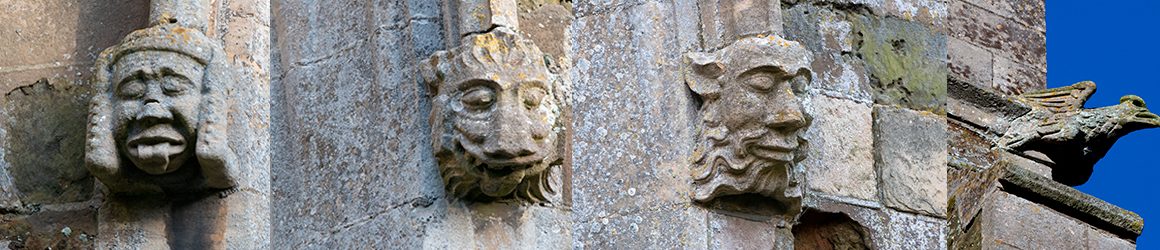
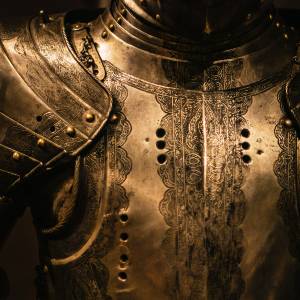
Follow in the footsteps of John of Gaunt, Geoffrey Chaucer, Henry IV and Oliver Cromwell
Saint Peter & Saint Paul has existed on this site continuously for close to a thousand years, with a mention in the Domesday of an existing Anglo Saxon Church. The present building dates from the 14th century, being completely rebuilt to reflect the growing importance of the proprietors of Bolingbroke Castle and the Honour of Bolingbroke. Exploring our Church you are following in the footsteps of such personalities as John of Gaunt, Geoffrey Chaucer, Henry IV and Oliver Cromwell.
Explore our rich History and Heritage:

Architecture
The South Elevation The earliest historical record of the Church in Old Bolingbroke dates from the Domesday Book entry of 1088 which confirms that there had been an Anglo Saxon building here in the days of Edward the Confessor. Unfortunately there are no existing portions of this earlier building. The current structure was constructed in…
Keep reading
Medieval Graffiti
Medieval visitors have left their mark by the incising of graffiti in the soft stonework. At St. Peter & St. Paul the observant visitor can find examples of both mason’s marks (left during the construction), font inscriptions and marks to discourage demons from entering the building. There is also a date inscription in the tower…
Keep reading
Henry IV
Henry VI Image Attribution Dulwich Picture Gallery / Public domain Henry IV was born at Bolingbroke Castle in April 1367. He was the son of John of Gaunt, Duke of Lancaster, and Blanche of Lancaster (who was also born in Bolingbroke Castle in 1342). Henry was probably christened shortly after his birth in St. Peter…
Keep reading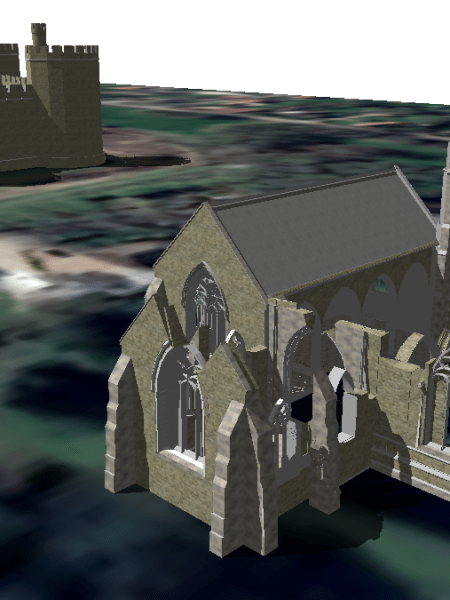
Civil War
St Peter & St Paul severely damaged after the seige of Bolingbroke Castle. During the English Civil War the Castle was held for the King, which had devastating results for the Church. In October 1643 Parliamentary forces under the Earl of Manchester left Boston after joining forces with Sir Thomas Fairfax of Yorkshire and Oliver…
Keep reading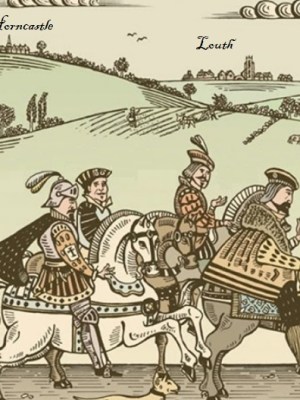
Lincolnshire Rising
Dr. Raynes seized by the mob and taken from Bolingbroke to Horncastle. The events at Old Bolingbroke are said to be the spark that ignited the Lincolnshire Rising. On 30 September 1536, Dr. John Raynes, Chancellor of the Diocese of Lincoln, and one of Cromwell’s commissioners, was addressing the assembled clergy in Bolingbroke, informing them…
Keep reading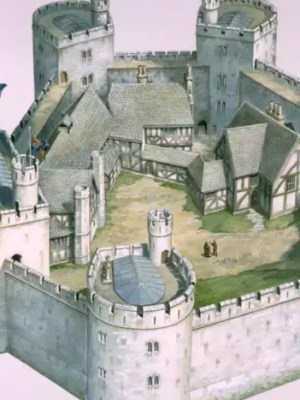
Bolingbroke Castle
Bolingbroke Castle was built circa 1220 by Ranulph de Blundeville following his return from the Crusades. Bolingbroke Castle was one of three castles built by de Blundeville across his various holdings in England. From the Castle the Earl controlled large areas of Lincolnshire known as the Wapentake of Bolingbroke. The Castle passed through marriage to…
Keep reading Friends of Old Bolingbroke Church